The Market Brief
U.S. stock index futures fell on Friday as a selloff in chip stocks deepened, forcing investors to reassess the sustainability of this year's AI-fueled rally.
Impact Snapshot
🟥 Consumer Sentiment - 10:00am
Macro Viewpoint
After a blistering run that lifted Wall Street’s main indexes to record highs, investors have started to retreat from crowded semiconductor trades as worries over the scale of AI-related spending resurfaced.
Thursday’s chip-stock-led losses had already set a weaker tone. The main indexes were on track for weekly declines, despite an initially upbeat start to the second-quarter earnings season from major banks and benign inflation data earlier in the week.
Geopolitical risks also loomed large. Iran said it had launched fresh attacks on U.S. facilities in the Gulf after a sixth straight night of U.S. strikes on Iranian military targets.
Prime Intelligence
The S&P 500 looks diversified on paper: 500 companies spanning every sector. In practice, a handful of names are doing almost all the work.
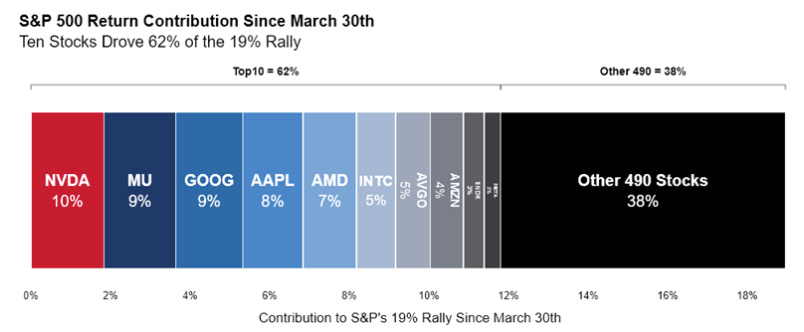
The top ten stocks in the S&P 500 now make up roughly 41% of the index, a level that barely moved during recent pullbacks and sits well above the roughly 27% peak seen at the height of the dot-com bubble. That concentration didn’t build up slowly either. The top 10 weighting has roughly doubled in just a decade, from around 20% in 2015-2016 to today’s level.
Takeaway: When 10 stocks carry that much weight, the index moves on their fortunes, not the economy’s. A stumble in just one of them drags the whole benchmark down, even if the other 490 are fine.
The Market Brief
In todays brief we break down how yesterday’s range call played out to the exact level, and why the traders chasing headlines for an explanation were already a step behind.
Join hundreds of subscribers already on the inside 👇